STAY CURIOUS
Keep reading to find the excellency out of perfection and skill.

By: Milestone 101 /
2026-06-05
bollywood
A Model's Death Exposes Fashion's Hidden Safety Blind Spot
The tragic death of Delhi-based model Divyanshu Joshi in Kerala exposes a major safety blind spot in India's fashion and advertising industry. The incident raises urgent questions about location permissions, on-set accountability, emergency preparedness, insurance, and the hidden risks faced by models working without formal protection.
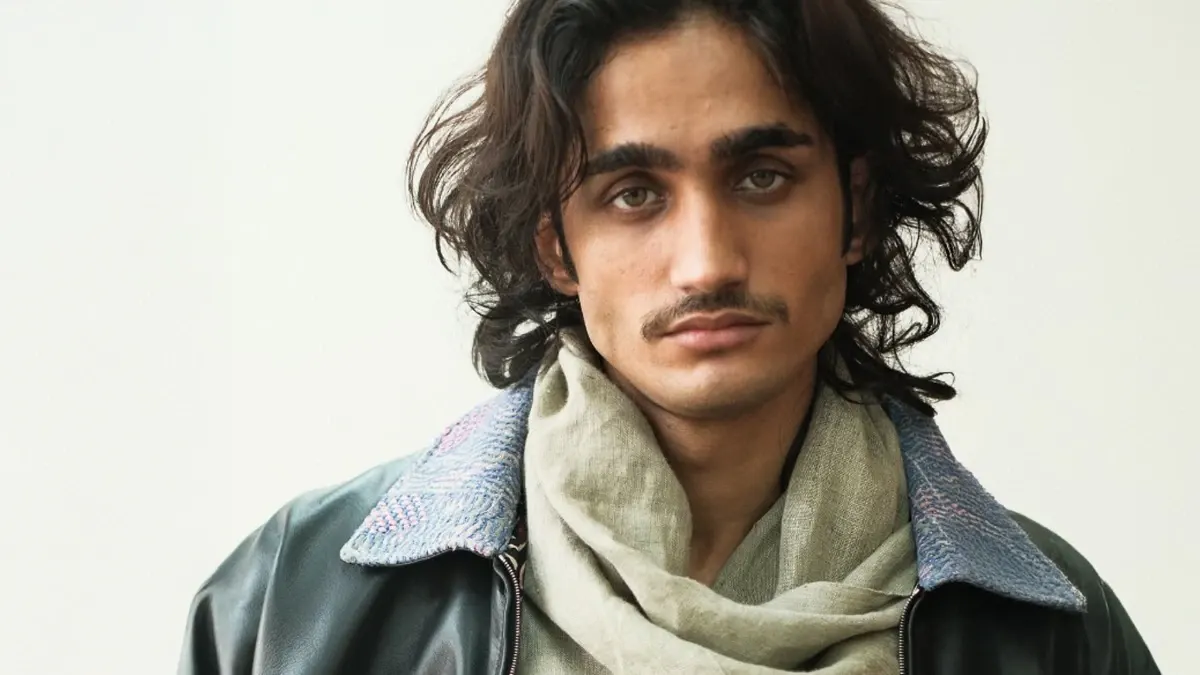
Can a fashion shoot still be called "creative" if it ignores basic human safety? The tragic death of Delhi-based model Divyanshu Joshi in a deserted pit in Kerala has brought this question to the forefront and what makes this moment so terrifying is not just a young man who is trying to create a career for himself; it is the overwhelming impact this has had on revealing a much larger culture of unregulated working conditions, little or no accountability, and a lack of any protection provided to models and fashion workers throughout all of India.
According to local authorities, Joshi had travelled to Delhi for an advertising shoot for a Delhi-based textile firm and had worked with Kartik Research before his death. He fell to his death while swimming in a quarry that local authorities say was dangerous and off-limits and has not been made available for swimming and play, with some reports stating that no permission had been granted from the panchayat for the film crew to shoot at the location.
A Tragedy Beyond One Model
This event has created something larger than a single tragedy; rather, it reveals a system that tends to view models as both visible and replaceable, important yet expendable, glamorous on camera but fragile in reality – especially when exposure occurs outside a controlled environment, such as at Fashion Week or in a studio. Theoretically speaking, the fashion industry's success relies upon aesthetics, ambition and risk-taking; practically, far too many of these risks are taken by those people who do not have the power to question them, and decisions are made based on improvisation rather than planning.
Thus, the tragic event that occurred in Kerala is not only a local incident but also an indication of how quickly beauty, branding, and urgency can become dangerously intertwined when safety is treated as an afterthought.
Protection That Rarely Exists
Many models perceive a lack of safety as quite typical in their field of work, based on responses from industry experts cited in the report. Many of these experts go so far as to say that they consider insurance to be an exception rather than the rule, and that the vast majority of jobs will not offer any health, accident, or life insurance coverage for models who are classified as independent contractors or who only have project-based work as a result of not having formal employment structures.
Therefore, the model appearing in the advertisement is often also the individual with the greatest financial exposure, the most medical risks, and the largest legal liability if anything were to go wrong. This disparity is exacerbated when the shoot occurs in the water, at high elevations, on rugged terrain, in sparsely populated areas, or in densely populated areas.
Safety on the Sets
The failure of production companies to provide necessary safety measures is very problematic. A report has noted that many productions do not have established protocols for on-set emergencies; no communication about how to obtain medical assistance; inadequate first-aid supplies; no system for rescuing injured persons or getting them to an ambulance or hospital; and no site-specific risk assessments. These shortcomings are particularly troublesome for all assignments involving work outside or in an unfamiliar location.
Some of the coverage cited various industry examples in which workers are seen as having the "least protection" on set and in which production companies tend to value a project over an individual. This is a blunt way of describing the production industry and its prioritising of picture-making, particularly if the project will take place in a remote, distant, or potentially dangerous location. In such cases, safety is not optional or merely an add-on to the project for budget reasons; it is the first condition for proceeding with production.
The Quarry Problem
In addition, this particular quarry also was not a new and/or innocuous location, as newspapers have indicated in their stories about the subject: the quarry has been inactive for years; was deemed a very dangerous place; was fenced off, gated off, or blocked in some way; and people in the area already knew that it was not a good location for them to go.
This means that this was more than just bad luck; it was an example of poor judgment and processes. Each time an individual enters a restricted area without permission and without safety planning, they increase their risk of an accident. The industry must determine whether using a scenic background in a film is ever worth the dangerous consequences associated with that background, unless it has been verified, permitted, and secured by agency authority.
Labour Behind Glamour
In the fashion industry, models are under a lot of pressure to be flexible, thankful and always available. This, in turn, leads many models to be wary of raising concerns about their pay, travel, accommodation, safety, or insurance for fear of being replaced by someone who would do all of the above without question.
As a result of this fear of missing out on work opportunities, there is a hidden labour market in which many workers have accepted to work under unsafe conditions simply because they fear losing work opportunities. The glamour associated with the fashion industry is a way to hide a huge injustice that occurs in almost every area of work: the workers with the least power to negotiate fair working conditions are often the same workers who face the most dangerous conditions for their safety.
Signs of Change
Parts of the industry are slowly changing in response to the situation, but overall, it remains inconsistent. Sunil Sethi, the chairperson of the FDCI, has indicated that designers are insured against accidents during Fashion Week and any corresponding events associated with an FDCI member, including those who participate in those events. In contrast, designer Rahul Mishra has pointed out that, as an industry, we should provide more opportunities for our talent to have accident insurance during outdoor shoots as part of the plan for future projects.
This is significant evidence of the fact that protective measures exist, although inconsistent in their application; the gap between the most organised Fashion Events and the organised area of Campaigns, Location Based Shoot, Informal Production and their corresponding work opportunities is too large, being primarily where all models spend the majority of their working hours throughout their career!
The Accountability Gap
The Kerala incident raises issues of accountability, both legal and moral. If something goes wrong during a film shoot, who is at fault or responsible? Who has the authority to clear a location? Who assessed the risk? Who ensured access to emergency services? And lastly, who should bear the costs when accidents occur?
These are not hypothetical questions; the film industry continues to live in a state of outrage, sympathy, and forgetfulness until these questions are answered. There have been no definitive answers to these questions; therefore, the film industry will remain in this cycle. One of the most alarming aspects from the information that was released was that many of these types of decisions are made vi" "juga"d" or last-minute, on-the-fly arrangements, which may be convenient for filmmakers but is life-threatening if used to compromise safety.
What Needs to Change
Real change will take more than an apology or a policy memo; it will require a fundamental shift in how fashion views labour (the way models are seen as just an image, even as they physically embody the industry's ambition). This means that all models should have access to standardised contracts and mannequins; model locations must be cleared; models must receive safety briefings; first-aid personnel need to be prepared for medical emergencies; and there should be greater accountability from manufacturers, brands, agencies and local production crews.
In addition, it will create a system in which models can freely express themselves without fear of repercussions; thus, silence is part of why unsafe working conditions persist.
The Takeaway
DivyanshJoshi's passing shouldn't be limited to an individual title, although indicative of a systemic failure to properly safeguard an industry that routinely normalises risk & provides too little protection for the very people who enable fashion to exist. If India wants its fashion industry to be considered modern, contemporary, global, or even professional, it must first demonstrate that it values human life more than it does a perfectly formed model. Until this commitment is fulfilled, each upcoming photoshoot will continue to face the same unwelcome inquiry: who has protection & who is being asked to put themselves at risk?
2022 © Milestone 101. All Rights Reserved.