STAY CURIOUS
Keep reading to find the excellency out of perfection and skill.

By: Milestone 101 /
2026-01-29
bollywood
Cinema After Dark: The Business of Expanding Showtimes
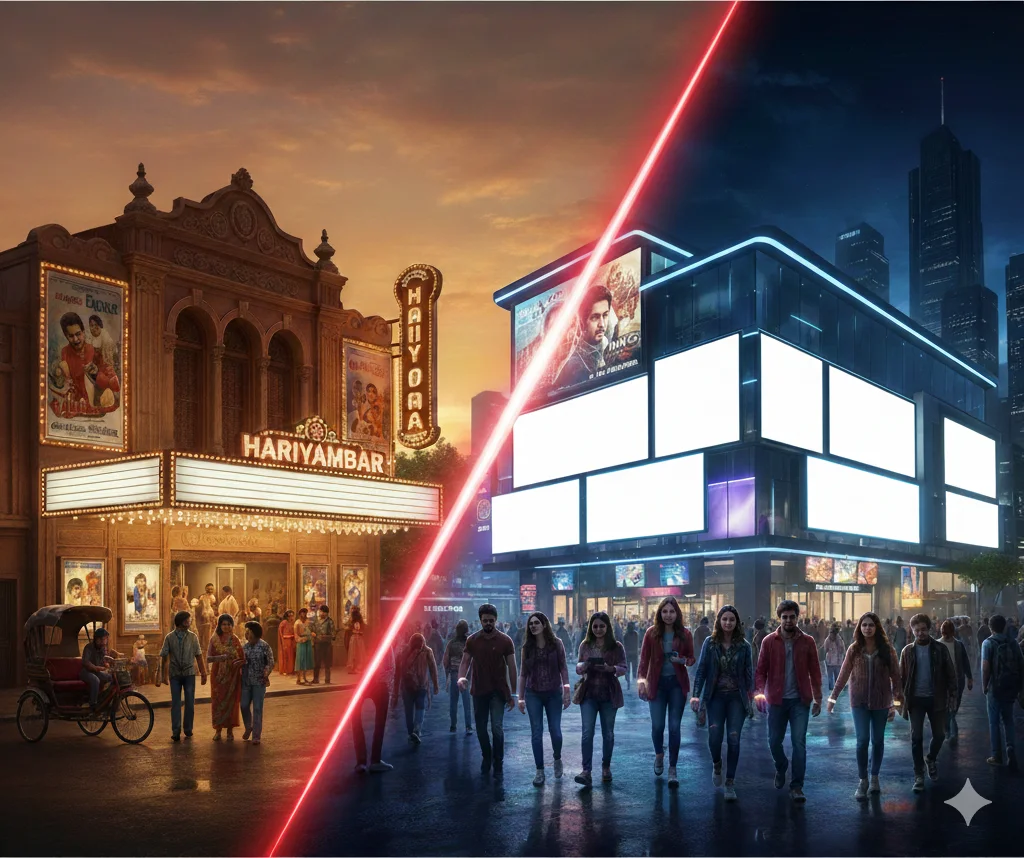
Post-COVID Indian cinema is evolving into a 24/7 entertainment experience. Late-night and early-morning showtimes, data-driven scheduling, and fan-driven screenings are reshaping exhibition strategies. Films like Dhurandhar, Chhaava, and Bhool Bhulaiyaa 3 highlight how regional demand, urban lifestyles, and performance metrics now dictate after-dark programming.
Stories told serially rely on the viewer's anticipation and emotional rewards, with cliffhangers as their backbone. Before the advent of binge-watching, radio, soap operas, and episodic dramas relied on withholding storylines until the next episode to keep their audiences invested and to sustain suspense until they got closure in some form. The format of soap operas has further developed by creating certain character types and locations that are regularly used to meet viewers' expectations for comfort and familiarity rather than development. This has been termed narrative elasticity: the ability to extend a story across multiple episodes without breaking.
While telenovelas and Korean dramas build on this cultural context, they maintain an underlying structure of evident suspense. Streaming platforms have altered how audiences experience television, compressing viewing wait times by enabling binge-watching, while the cliffhanger remains but is crafted to let viewers move directly to the next episode. Micro-dramas also follow this same premise by providing only a single point of intrigue in a storyline. At the same time, the main body of the story is secondary, providing immediate emotional resonance through mobile-first viewing.
The obvious question for any exhibitor, then, is simple: what changed in the business of Indian exhibition that a 3.5‑hour Hindi film can run all night and still find enough people willing to buy a ticket?
From Prime-Time To 24×7
For most of the single-screen cinema era, this would have been considered unbelievable. The traditional operation of Indian cinemas followed a systematic cycle of morning shows for students and price-sensitive viewers, matinee shows, evening shows for family socialising, and late-night shows, usually ending by 11:30 pm. Additional benefit shows were created for larger festival launches or high-profile films. Distributors negotiated these shows to enhance their reputation rather than maximise profits. Additionally, the structure of this system was defined by cinema's performance as the primary medium for mass-audience communication. Therefore, cinemas could predict the number of people who would attend each mainstream film.
But the post-COVID decade looks very different. India Today’s detailed dispatch on “a dwindling audience” chronicles how, even in a cinema‑loving country, post‑pandemic footfalls have refused to return to pre‑2019 highs, leading to a squeeze on margins, particularly for single screens. Industry voices in that piece report that hit films attract footfalls of only 30–35 million in a country of more than a billion, underscoring Aamir Khan’s view that India has far too few theatres for its population and yet still struggles to fill seats consistently.
The paradox is that India remains one of the world’s great theatrical markets: a World Economic Forum analysis points out that Bollywood has been the largest producer of films globally for over a decade, that India releases close to 1,800 digital features a year, and that Indians buy more cinema tickets than any other nation. The crisis, then, is not a lack of love for cinema but a mismatch between supply, scheduling and how urban audiences now live and work.
To resolve the structural crisis, the emergence of after-dark cinema increases ticket sales per show, which suffer as footprints decline due to fewer people attending the theatre. To create revenue opportunities, chains are increasing the number of shows throughout the day by further segmenting the day into smaller time slots and by using data to place the appropriate content in front of their respective micro-audiences. In this way, there is a significant change in how multiplexes operate with respect to when shows occur and how often. With shows starting at 6 a.m., the extension of “fan shows” to midnight, and the increasing popularity of early morning and late-night showtimes, chains are now testing non-traditional hours of operation based on their prior success.
This is due, in large part, to current trends in Asia, where ticketing is now performed in real time via mobile apps across various tech platforms. Therefore, it is not surprising that Indian cinema chains have become very nimble in receiving data from ticket aggregators and multiplex apps, allowing them to adjust the number of shows based on ticket sales at any given time. Therefore, the shift from instinct to analytics is not a gradual culture change, but rather a change driven by technology, and the willingness of Indian multiplexes to utilise technology to help grow their businesses and take advantage of the increased demand for non-dusk shows, especially those that they identify as potential “event films” with potential repeat audiences.
Maharashtra: The 24×7 Lab
In contrast to the overarching national landscape, in which under-screening coexists with over-demand, Maharashtra exemplifies the convergence of policy and practice. The Maharashtra state government authorised the continued operation of retail stores and establishments beginning in 2023, creating a significant opportunity for multiplex theatre operators. If done correctly, continuous operations can generate an additional 25-30% in revenue in major metropolitan areas.
Coverage of this change in Livemint and Whalesbook described how theatre owners, mall developers and others involved in the film distribution and exhibition business viewed this legislative change as a precise fit for the needs of a growing population of younger workers, gig workers and others who work non-standard hours. For example, not all movie theatres will be implementing three o’clock AM showings seven days a week; however, the legal limitations to a specific level of day/evening hours are now lifted, enabling multiplexes to operate at any hour of the day or night if they deem it necessary based on projected customer demand.
Yet policy on paper did not instantly translate into glowing neon at 3 am. Moneycontrol’s earlier reporting captures the hesitation that characterised the first couple of years after Mumbai’s 24×7 nod: multiplex owners were unsure about additional security costs, the logistics of transporting staff at odd hours, and whether local police permissions would vary by district. There was also the question of whether audiences truly wanted these slots or whether 24×7 was more of a branding claim tied to the city’s “never sleeps” mythology.
In those early months, late‑night shows were mainly limited to weekends and a few big releases, and even then, many properties watched bookings cautiously before committing to fringe timings. Maharashtra thus became not a free‑for‑all but a controlled lab: a state where the legal infrastructure allowed exhibitors to experiment without fear of violating regulations, but where commercial reality still demanded a data‑driven approach.
Over time, this lab has expanded to provide a more comprehensive policy base. The earlier 24×7 permission, which seemed ideal, has enabled Mumbai and Pune to respond more effectively to significant disruptions and to increase the time available for exhibitors to address their programming. For instance, when Dhurandhar began performing exceptionally well, particularly among younger urban participants, the exhibitors could schedule additional shows late into the evening because they knew they were operating within established regulations.
The same applies to Chhaava's morning and late-night shows in Maharashtra. The ability of those shows to translate the film's emotional impact into sales in the marketplace would be significantly enhanced by quickly adding early-morning shows in Pune and late-night shows in Mumbai. The effect of the differences between markets where such permissions do not exist (or there remain strict municipal limits) becomes glaringly apparent: for the same film (Dhurandhar), in one market studios will essentially max-out four shows per day; in another market, the same studio can add up to 6- or 7-shows in a single day or day-part due to the flexibility of the jurisdiction's regulations during the nighttime.
Data Over Instinct
Maharashtra supplies the regulatory runway, while the data indicates which movies will land in the late-night and early-morning sky. An example of this new logic is Bhool Bhulaiyaa 3; according to IndiaTodayNE, the horror-comedy not only had a strong opening weekend and continued to be popular during the week, but also prompted multiplexes in Mumbai to add 1 am and 3 am showings.
These additional showings were not simply to appease fans; they are estimated to have generated approximately ₹75 crore (INR) in additional revenue, which illustrates why chains will extend their hours until the early morning if occupancy metrics indicate it is worth it. The narrative follows the same pattern that has already been established in previous films; the sell-out or near sell-out of opening weekend shows (90%-95%) generates overflow demand for tickets through online booking channels or in-person box-office sales, leading major chains to offer these types of "fringe shows" as opposed to turn away patrons.
Chhaava’s trajectory, as mapped by Hindustan Times and the Times of India, highlights how granular that data can be. In Maharashtra, the period drama’s local resonance with the story of Sambhaji Maharaj led to remarkable occupancy: reports indicate 97% occupancy across key properties in the state, with Mumbai and Pune performing especially strongly. Exhibitors responded by slotting 6 am and midnight shows in these cities, not in a blanket national rollout but in a region‑specific expansion driven by where bookings were spiking.
The message is that a 6 am show is no longer a symbolic gesture but the outcome of a spreadsheet; if morning and late‑night occupancy projections clear an internal threshold, that show appears on the app. In one sense, “performance over hype” can be visualised as a simple line: once occupancy at prime hours crosses, say, the 90–95% mark, fringe shows become viable, with Maharashtra’s 97% figure for Chhaava the sort of number that virtually guarantees a 6 am slot in a city like Pune.
Dhurandhar has emerged as a leading figure in Bollywood's all-night production experiment. According to NDTV's report, despite being released with a bang at the box office on a Friday, it had a rapid accumulation of 12 and later 1 am midnight screenings throughout India, including two cities such as Pune (12:20 am) and Mumbai (12:45 am), then moving into a fully 24/7 screening rotation in many parts of Mumbai. Pragativadi noted that “Mumbai has had movies screening 24 hours a day, seven days a week” as evidence of the movie's success since its opening and as a new benchmark for late-night screenings.
Fortune India noted that Dhurandhar's success was part of a “winter tailwind” that will carry all of December, bringing positive momentum to Bollywood after a few years of inconsistent results. Economic Times’ Panache reported on the surge of people wanting to see Dhurandhar because of its popularity in metro markets, especially as it prevented other movies from getting exposure during the time of its film chain's nightly screening of Dhurandhar, which has allowed it to be added to the ₹15 crore list while pitted against a movie whose popularity spread into the late-night slot.
The pattern across these cases is clear. Late‑night and early‑morning shows do not appear out of nowhere on day one; they are typically added in cascading waves once data from pre‑sales and the first few days suggests that demand will hold. Drishyam 2 and Brahmastra mark an earlier phase of this shift. Mashable’s piece on Drishyam 2 describes how 6 am and late‑night shows returned in the wake of the film’s success, with exhibitors explicitly presenting the film as the title that broke a “flop spell” and restored faith in theatrical releases.
Hindustan Times’ Brahmastra coverage notes multiplexes opening early‑morning and late‑night shows “amid huge demand”, signalling that even before formal 24×7 permissions were widely discussed, crowd‑pullers could bend showtiming norms when occupancy patterns warranted it. In this light, Bhool Bhulaiyaa 3, Chhaava, and Dhurandhar are not anomalies but refinements: case studies in how far beyond traditional hours exhibitors are now willing to go once a film has proven itself.
Dhurandhar, Chhaava, and Bhool Bhulaiyaa 3
One key trend emerging from this is that Dhurandhar was the first film to show how Maharashtra would implement its 24x7 policy. NDTV reports that the film's performance on the second Friday and ninth day remains strong, prompting multiple theatres to add more late-night or very late-night shows rather than reduce them. Pragativadi also observes Mumbai adopting a 24x7 approach to Dhurandhar, with shows now running during the 'night hours' as if the theatre were a flight terminal, with red-eye flights scheduled during these times. It is vital to observe Dhurandhar's example, in that the late-night and very late-night shows did not just occur in the opening weekend, but continued into the second week of the film, which means that Dhurandhar's excellent performance confirmed that only successful films will be able to be shown during the most limited hours.
Chhaava’s case is equally revealing, particularly because its success is so regionally concentrated. Hindustan Times reports that the film added 6 am and midnight shows in Maharashtra after “huge demand”, with occupancy in the state touching 97% at specific points. The Times of India echoes this, noting that the record‑breaking response in Mumbai and Pune – driven by the local emotional connect to the story of Sambhaji Maharaj – prompted exhibitors to add more fringe showtimes in those cities, even as other regions took a more conventional approach. Chhaava, then, becomes a template for how cultural/regional affinity, combined with complex booking data, can shape particular night-and-dawn slots rather than a uniform national strategy.
In the case of Bhool Bhulaiyaa 3, there is a connection. Genre and Analytics come together as one. According to an IndiaTodayNE article, adding late-night shows at 1 a.m. and 3 a.m. in Mumbai increased box-office revenue by ₹75 crore. They provided a strong business case for programming horror-comedies late at night because of the genre's "dark" nature. The evidence presented in a separate article in India Today reinforces the idea that, even if a genre is suitable for late-night programming, it does not automatically qualify for such programming. Exhibitors' primary focus will always be on box-office numbers, before any consideration of the material's subject matter. While the horror aspect of a film is a positive factor for theatre operators, ultimately, the numbers drive late-night screening decisions.
SRK, Fandom, and Dawn Shows
This lattice of data and policy has produced one aspect of the culture of fandom surrounding many popular filmmakers. The “fan” phenomenon, with its tangible and intangible elements, has emerged over the centuries to help shape the launch of global franchises, whether at midnight or early in the day when they release their newest films (as illustrated by Shah Rukh Khan's recent slate). As reported by the Times of India, Dunki's 5:55 a.m. screening in Mumbai was strategically chosen for both numerological and symbolic reasons that tie into the film's themes and the fervour of its fandom; the early-morning screening was positioned as a "special" event.
According to the Hindustan Times, SRK fan clubs were able to organise a special early-morning screening of Dunki at Gaiety Cinema, making the first screening of the film a community event complete with banners, chants, and organised attendance that attracted near-full occupancy to the screening before the general audience had eaten breakfast or even drunk their morning cup of tea. Theatres have leveraged the highly mobilised online presence of the Fan Clubs and pre-booked the entire run of Dunki, when SRK fan clubs actively promoted these events via social media; therefore, there is virtually no risk of a fan club filling the hall for a 5:55 a.m. show.
The same phenomenon, only heightened, occurred in the cases of Pathaan and Jawan; however, documentation of campaign activity to date may not be available via the links provided for Dunki and earlier fan-event promotional shows. The impact of SRK's return post-pandemic is evident in changes in exhibitor behaviour. Using the example of fan clubs and their requests for shows, exhibitors could identify that fan clubs in Mumbai and other major cities are requesting 6/7 am weekday showings for movie openings and when these fan clubs essentially backed up their requests with the expectation that these showings would sell out as easily as the prime show times/screening slots, the exhibitors are willing to comply.
It is not just the star power of the identified stars that will drive ticket sales; it is also the predictability as to whether or not the demand will materialise. Fan clubs provide exhibitors with a quasi-guarantee of ticket sales during non-traditional hours and, therefore, help determine whether it is worth taking the risk of offering additional showings. The cases of Pathaan and Jawan, thus, represent the culmination of the phenomenon of “hysteria-driven” exhibition.
Yet even here, the data lens remains crucial. A fan‑driven 6 am show is likely to be granted only when overall booking trends are robust; a mid‑tier star vehicle with modest pre‑sales rarely enjoys that privilege. Brahmastra’s early‑morning shows, Drishyam 2’s 6 am screenings, and Dunki’s 5.55 am slot form a timeline in which exhibitors have learned to use fandom as a demand‑forecasting tool rather than an uncontrollable force. The ritual of dawn shows, especially for SRK, thus becomes both a cultural phenomenon and a business instrument: a way to front‑load revenues, capture social media buzz, and set a film up as an “event” whose life can then be extended into the nights that follow.
Urban Nightlife And New Audiences
Given that audience behaviour is especially conducive to socialisation during late-night hours (in urban India), the opportunity presented by supply-side tools and fandom can be complemented by audiences' willingness to socialise. According to an article published in the Hindustan Times, late-night socialisation has exploded in many Indian metropolitan areas following the COVID-19 pandemic, as evidenced by young professionals dining until after midnight, visiting multiple cafés, and treating their cities as 24-hour playgrounds. With climate-controlled, perceived-safety environments, multiplexes located within malls can accommodate groups for 3 hours without the threat of harassment on the streets or the possibility of being closed for business.
According to an article published by the Times of India, because of very high daytime temperatures and heavy traffic congestion in North India during the summer months, the highest number of blockbuster movies are shown during the late-night hours: individuals are more likely to see movies at night due to working during the day and not being able to tolerate the extreme heat during the afternoon hours. Therefore, for a small segment of the urban population in India, a late-night movie starting at 10:30 p.m. and ending just before 1:00 a.m., or at 1:00 a.m. and ending at dawn, fits better into their work-life routine than a traditional afternoon movie starting at 3:00 p.m.
Around six in the morning, we are often enamoured of both fan culture and ritual culture. Elements such as people dressed in jerseys or cosplay, carrying posters and cheering at title cards, evoke a festival atmosphere that is more akin to a religious service than to an entertainment purchase. Because of this, the individuals in these thread pictures do not simply walk into the venue as casual walk-in customers, but rather according to a predetermined plan based on when and where they can travel, when they need to sleep, etc.
The exhibitors will most likely perceive this type of behaviour as valuable. If a title has the right combination of the right fandom ecosystem, such as that of a film featuring SRK or a movie in a specific horror franchise, or even in a particular regional entertainment context, the exhibitors will likely be able to open up the opportunity for them to have these films during times that previously seemed unattainable, commercially speaking.
In the Tamil film industry, this has already been practised for decades. The Hindu's explanation of why Tamil films dip into the tradition of early morning offerings, or special morning shows, has been in place for years and has taken the form of recorded stages at the director's temple and live processions around the time of premieres.
However, Hindi films are now adopting a similar approach to Tamil films in creating exceptional morning display opportunities. Still, they have taken this opportunity, adapted it, and used the insights gained from studying multiplex distribution systems to deliver it, rather than relying on hand-painted posters or special displays for marketing.
Seen through this lens, late‑night and early‑morning shows are not outliers but the tip of a broader 24‑hour urban rhythm. Gyms, restaurants, delivery services and co‑working spaces now cater to flexible timetables; multiplexes, with their high fixed costs and sunk investments in real estate, are simply catching up by trying to sweat their assets across more hours of the day. The generational angle is crucial here. Younger audiences are more comfortable with life lived across irregular hours, especially in IT hubs and service‑sector cities; many work late or keep international time zones, making a midnight show less disruptive than it would be for a strictly 9‑to‑5 labour force. In this sense, the cinema after dark is as much a reflection of lifestyle change as of exhibition strategy.
Regulation, Risk, and Limits
Despite its growing popularity, the current trend is hampered by legal, political, and risk-related constraints. A salient example is the order issued by the Telangana High Court on July 4, 2018, prohibiting children under 16 from entering cinemas after 11 PM until appropriate regulations are in place. This decision addressed a significant concern about minors attending midnight screenings and imposed age limits on those who may legally participate in such screenings in the state.
As a result, this decision will significantly reduce the number of potential customers for theatres that show films after 11 PM. It may prompt theatres to be more strategic in the types of films they present in their late-night programming, with a greater focus on films that appeal to adult audiences. Movies aimed at youth or families may not create enough revenue after 11 PM.
Beyond such judicial orders, many states still operate under a patchwork of local rules. Police permissions, municipal bylaws, and legacy guidelines governing benefit shows mean that Maharashtra’s 24×7 model cannot simply be replicated across the country. Some cities impose limits on how late a show can start, while others set limits on how many special shows can be held during a festival weekend.
Yet, others have informal understandings between local authorities and theatre owners about when crowds must disperse. Labour laws and overtime norms add another layer; staffing a multiplex safely at 3 am requires not only more wages but also secure transport and coordination with mall management. These practical constraints act as friction, ensuring that even if demand exists on paper, a marginal 1 am show might not be worth the logistical hassle in every market.
Another aspect of the current political situation is influencing us, albeit more subtly. A piece in the New Yorker documented how members of the Hindu right have been using several recent Bollywood productions to promote calls for protests, boycotts and social-media harassment. This has given rise to apprehension among exhibitors about how it would translate into potential law-and-order issues. Exhibitors may feel that scheduling a late-night showing of a controversial or politically sensitive film is riskier, especially when there are uncertainties about how groups will mobilise against it.
In cities that are classified as "smaller cities," exhibitors may be even more reluctant to extend late-night programming for films that feature ideological content. Therefore, exhibitors are more likely to programme films during traditional daytime hours (and possibly into the early night hours) that may be considered safe, mass-market entertainment for families, rather than films with ideological content. Thus, "cinema after dark" has become a programmed experience developed and curated to address both risk-management considerations and the raw consumer demand for additional programming hours.
Performance Over Hype
This brings the discussion back to the core pivot of the post-COVID exhibition business: performance over hype. India Today’s look at dwindling theatrical audiences lays bare why exhibitors can no longer afford to take wild bets. Too many star‑driven vehicles have underperformed despite loud marketing, and the cost of dedicating a screen to a weak film at a prime evening slot, let alone at a marginal time, is higher than ever in an era of reduced walk‑ins. The result is a cautious, data‑dependent mindset. Earlier, a Diwali biggie might have secured extra benefit shows purely on star power or producer pressure. Now, multiplex programmers wait for bookings, show‑wise occupancy and social‑media word‑of‑mouth before turning their properties into 24‑hour cinemas.
The second-weekend boom for Dhurandhar can be seen as a reflection of the new reality of conservative behaviour in cinema. Unlike in past experiences in Indian cinema, where the opening weekend would make or break a film's performance, Dhurandhar recorded a strong second Friday gross and continued to expand its late-night and after-hours programs at the nine-day mark.
Under the old paradigm, films would have to achieve a strong opening weekend only to have an extra day or so of late-night showings. The new paradigm holds that only through longer-term, steady revenue and grosses will films generate additional showtimes after dark. Other films, such as Chhaava's occupancy rate of approximately 97% in Maharashtra, along with Bhool Bhulaiyaa 3's jump of ₹75 crore from late-night shows, provide a snapshot of the same story.
While this indicates that the added shows for Dhurandhar resulted from its extended run of box-office success, when occupancy rates drop and social media interest declines, the added shows typically no longer appear on the platform.
SRK's releases filled the gap created by fan club exceptionalism perfectly, through their 1st week hysteria on a scale never seen before (Pathaan & Jawan), SRK's releases were able to sustain the extraordinary levels that, through tickets sold, filled seats & an audience that has been engaged enough to return & recommend a movie. A film like Brahmastra & Drishyam 2 broke the trend of being labelled a flop by delivering consistent footfall, allowing showtimes outside the traditional, predictable 4-shows-per-day format. Hype may ignite an explosive opening (like SRK fan clubs generating 5:55 am showings), but it is the film's performance that fills those 3 am Wednesdays with audiences, even if it isn't during a holiday.
The Takeaway
A broader change has come for Indian exhibition and will be seen as an opportunity through the lens of cinema after dark. The scheduling of cinema is best seen not as an isolated incident, but as an evolution as Indian cinema transforms into a 24/7 entertainment service industry, using elastic showtimes (variable hours), scaffolded policies, expanded fandom (through social media), and a heavy reliance on data to determine how to present films.
The question remains whether alternative cinema will remain the province of only a few metropolitan cities and a select number of films targeted at a younger, urban demographic, or whether the broader implementation of public transport, new labour practices, and state-level regulation will make all-night cinema a mainstream cultural experience. Every 6 a.m. and 2:30 a.m. sell-outs indicate tha,t at least in limited markets throughout India, the day's hours have become a small enough unit of measure to continue fueling a growing desire for cinema on the large screen.
2022 © Milestone 101. All Rights Reserved.