STAY CURIOUS
Keep reading to find the excellency out of perfection and skill.

By: Milestone 101 /
2026-05-14
hollywood
Stage, Skin, and Spotlight: Female Pop Stars and the Politics of Visibility
From corsets at Coachella to hypersexualized stage performances, female pop stardom is increasingly shaped by visibility, spectacle, and visual expectations. This article explores how lingerie-inspired aesthetics, industry pressures, audience behaviour, and social media culture have transformed sexuality into a defining element of modern female pop performance.
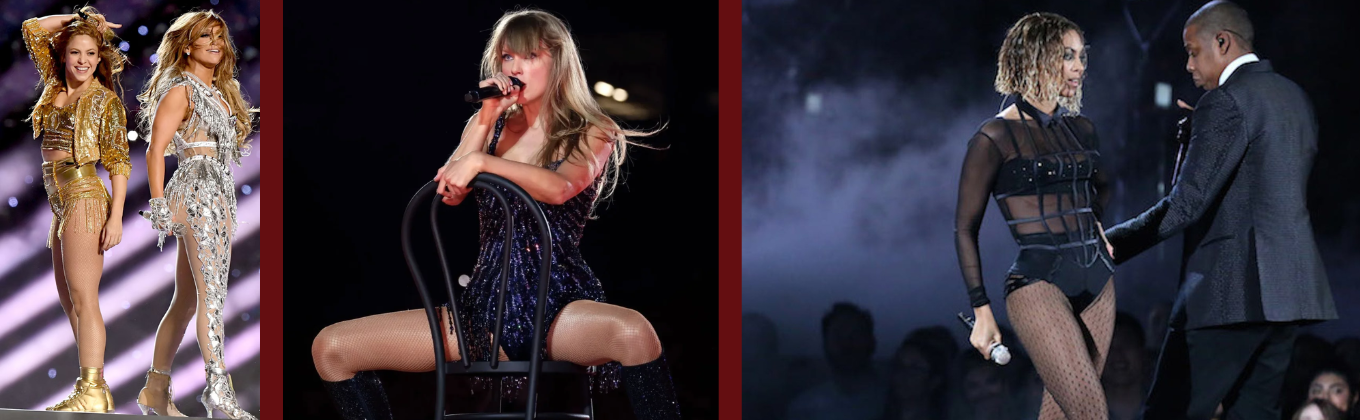
When did female pop stardom become as much about the body as the music itself? Madonna's and Sabrina Carpenter's appearance on stage at Coachella in corsetry and lingerie-type attire made an immediate impact on the audience before they played a note—the visual component of this performance had already been set. In this way, their performance was visually about much more than music (e.g., the styling, choreography, or spectacle).
Perhaps the most memorable aspect of the moment was how familiar the aesthetic was, not how shocking. There now seems to be a structure to the concert, the music video, or the global tour, as the unspoken expectations of sexuality, appearance, and presentation shape female performers. When these structures are visible, the stage does not seem completely devoid of structure; it appears to have existed longer before the artist stepped onto it.
The Pattern, Not the Person
It is important to clarify that this discussion is not about questioning an individual artist’s choices (i.e., how she dresses, performs, and presents herself). Furthermore, this discussion does not hold artists who operate within a much larger music industry responsible for those choices. Rather, this is a discussion about repetition of visual choices, performance, and aesthetics across a wide range of individual artists. All of these artists are obviously different in sound, style, and identity, but they all repeat similar visual choices, performances, and aesthetics.
When you consider artists like Beyoncé and Taylor Swift, who have both created their own unique identities as artists over time, it becomes clear that not only are they incorporating sensuality into their performances (which is nothing new), but there is also a greater expectation of how this sensuality will be expressed—and in some cases, it has become so expected that the visual aspect of their performances has begun to take on a consistent form even as the musical styles have moved forward; for many years now, the formula for female pop stars has included elements of glamour, sexuality, and performance; however, the integration of these elements into what it means to be a "well-rounded" female pop star seems to have become much more organized, intentional and therefore essential to an individual's ability to be visible.
This is where the observation becomes less about moments and more about patterns, less about choice and more about repetition, because when different artists, across different eras and genres, begin to present themselves in ways that align visually, it suggests that something larger than individual preference might be at play, even if that something is difficult to define in a single sentence.
Performance vs Presence
During the discussion, one of the notable points is that the dialogue isn't solely about the actual clothing; to frame the whole concept in terms of clothing is not to get the much larger, broader point across. An example of this would be the recent increase in the visibility of lingerie-inspired costumes on stage, as well as the fact that many performances revolve around the expression of sexual identity through all aspects of the performance - from choreography to camera angles, lighting, and stage design - creating a very specific type of expression that was meant to be viewed/represented in a certain way.
Multiple sources, including research studies and media analyses, have demonstrated that women portrayed in music videos/live performances are often depicted through visual elements focused on their bodies, movement, and overall attractiveness/desirability. In many cases, the presentation of women through visual imagery overshadows or competes with their musical performance. Often, the images presented by women in music videos/live performances are not overtly stated. I.e., an emphasis on a visual representation, e.g., camera angles or length of time the camera stays on a certain subject, may be subtle, but still can ultimately help to tell the entire story.
The distinction made here will separate the concepts of presence and performance, where presence could simply be the act of being on stage while singing, creating a sense of being part of the music by being in the space it occupies. Still, performance is more intentional than just doing something.
Every movement made by an artist contributes to a larger visual narrative; therefore, when many different artists repeat this type of performance, it begins to come close to the idea of an artistic style and a common way of establishing visual representations, which is something that is becoming recognisable and understood by all audiences, so much so that they will begin to look for this type of performance from every artist they support.
The “Personal Choice” Question
The idea of personal responsibility often comes up in conversations about these issues because it is frequently cited as the most immediate reason for artists' behaviour- they simply do what they want because that is how they feel most comfortable. For many artists, this may well be the truth, as agency and expression are difficult to separate, since these artists often make decisions and form reactions through both.
However, what begins to become fascinating and somewhat more confusing to consider is when similar personal decisions repeat themselves across multiple artists from various record labels; multiple artists represented by various artist management companies; multiple artists in different cultural contexts; and multiple artists within different genres of music, then one has to consider further how the concept of personal choice has then intersected with the concept of patterning. The inquiry will shift from a question of "why is this artist making this decision?" to "why are so many artists making similar/dependent decisions?"
There isn't one correct answer to this question. You could never point to one reason for such a complex relationship between agents and industries. Individual preferences, market trends, mass-audience expectations, professional incentives, and other influences affect performers in the industry, particularly as they work within their given landscape. Discussions of this relationship in media and cultural studies take into account how performers experience the complexity of their industry, including navigating individual and structural influences on visibility and their intersection.
In addition to being an interest of academic inquiry, it appears to posits a question about the nature of the industry as a collective system. Once a particular expression form becomes a prevalent, repetitious, and recognizable form, to what extent does it continue to be a strictly individual expression and to what extend is it a recognition of something shared (i.e., collective) and that has been fueled by external and non-visible forces?
The Gender Contrast
When considering how men perform as a whole, the examples of these two men doing so are very different, so they stand out plainly beside one another. This difference exists because no expectations are placed on men regarding performance, as seen in visual or physical representations. For someone to see them as serious musicians and get attention on stage, they do not have to perform as a specific type of attractive male would.
Take Chris from Coldplay as a clear example of this fact; to many, he may look plain or normal, but his appearance and energy are not. At the same time, he comes out of the performance itself, the music, the participation with others who are watching, rather than his physical representation as a man. Some male performers choose to use more elaborate means of representing themselves; however, this does not establish a baseline for what is expected of male performers.
What emerges from this contrast is a subtle but consistent difference in how visibility is structured, where male artists are often allowed to exist primarily as voices, as personalities, as musical identities, while female artists are more frequently positioned at the intersection of voice and body, where the visual becomes inseparable from the performance in ways that are not equally demanded of their male counterparts, and this asymmetry, once noticed, becomes difficult to ignore because it reveals not just differences in style but differences in expectation.
Who Shapes the Image?
A performance on stage does not merely involve the artist; there is an ensemble of individuals behind the scenes who contribute to the artist's presentation. This ensemble of individuals, often referred to as the "artists' ecosystem," includes producers, record labels, creative directors, stylists, choreographers, and marketing professionals. These team members all contribute in different ways to how the artist is presented to the public. It would be incorrect to conclude that any single group of these individuals makes any single decision about how the artist will be presented to the public in isolation.
Multiple studies worldwide, including those from the USC Annenberg Inclusion Initiative, have documented that the majority of music industry executives are men. This includes the fields of producing, executive decision-making, and direction. Although this does not mean that a particular style of presenting the artist will be the same for all artists, it is safe to conclude that the framework in which these decisions are made is primarily driven by the same perspectives and priorities.
Instead of seeing this as an intentional or planned campaign, it would be fairer to see it as a systematic way to reward specific visual aesthetic elements, performance styles, and identities. The artists who align with the community's views on how these types of art should be presented will receive more opportunities to be seen, featured, and rewarded. Through repetition, these patterns begin to build on one another, creating a cyclical pattern for the artists, not because of enforcement but because of continuous rewards for their work.
The Body Type Pattern
When you consider the visual and performative side of a pop star, another, less talked about aspect of the physical presence of female artists who dominate international stages is the surprising likeness in body types, level of fitness, and general aesthetic appearance; the number of different ways artists appear when you focus on their bodies is much smaller than we would normally see when viewing a wide range of talent in the industry.
For the most part, artists all have specific body types: thin, toned, very fit, and their physical presentation is stylised to meet current beauty standards. While many attributes relate to maintaining stamina and the ability to move and carry themselves on stage during performances, the overall visual ‘look’ creates an aesthetic consistency that, in a roundabout way, also defines what a pop star's body is, even though that definition is never made explicit.
The start of standards comes from an understanding of them as expectations rather than rules, which are conveyed by the same information (and thus, the same way) over and over again and then made apparent solely through the repeated visual representations that the audience sees until different styles or aesthetics and different ways of presenting themselves start to feel "normal" (and/or "given") to the audience, which then helps to shape their perceptions of what is "cool," "attractive," or "stage ready" — without anyone having formally declared that to be the reality.
The Performance That Strips It Away
There is and was a video of a performance on the Internet that has gone viral and that you would likely have come across and have been able to easily identify, as a result of it being viewed by so many, where a performer is dressed as you would see a pop star dressed—her hair in a style that defines the character she plays to men and women alike, her face covered with make-up, and finally, wearing an outfit that seems to exist just as much for its visual impact as it does for the ease with which the singer could move while performing. The piece that she performed was one that, upon hearing at the beginning of the performance, sounded the same as so many other songs that we have heard before.
At some point, things began to change; initially it was very gradual and hard to notice and was personified by the entry of women to the stage who were not dancing and were not auxiliary performers but were taking part, in an act that was quite different, whereby the performers took away stage-by-stage the components of the image that had been built around the performer, which consisted of the removal of lipstick, the removing of foundation, the taking out of all of the structure in her hair, and altering the outfit so that she looked like an ordinary, more real person; by the end of the performance, the performer was no longer a polished version of herself, but rather, a closer representation to what we would think is "real", to who she really is.
What resonated most strongly was how people reacted to this particular event. Instead of confusion, audiences responded with a sense of familiarity towards what was happening; almost like this performance validated feelings they had felt but didn't yet know how to articulate, and gave them a physical opportunity to think critically about what they just witnessed by creating an opportunity for viewers to compare two different forms (constructed versus deconstructed) of reality all at once.
Impact Without Moralising
As we take a look at the bigger picture instead of just the individual performances, we see that rather than being a cause-and-effect relationship, many different kinds of patterns determine how people evaluate value, attention, and success in pop culture- especially with respect to younger audiences who are still developing their idea of what it means to have visibility, admiration, and celebration.
After seeing the same types of performances repeated, having the same shapes and sizes of bodies, and experiencing a routine style of visuals, eventually these things become so familiar that they are now an integral part of the expected pop star vocabulary, not because there has been any formal teaching or enforcement of it, but rather by way of substantial and frequent exposure, frequent reward and recognition for them in the media and through social media and fan discussion.
In this way, the concept of visibility has become its own currency. The methods by which artists gain visibility will impact how audiences define their success. The patterns in the industry will shape the expectations audiences bring and define not only what they see but also how they see it.
The Takeaway
For all of its history, the stage has been the backdrop for music and motion, the heart of a momentary but electric link between audiences and performers. But within this exchange, there is a shift in focus, seemingly before the first note is even played, from sound to image—the silhouette of an artist and a visual narrative that begins the moment they step into the light.
So, there is a much less obvious shift of focus compared to earlier, almost unnoticed, from "what is happening" in the world of performance to "what do we notice first". Additionally, the continuity of these expectations soon begins to feel less like options and more like a natural repetition.
What exactly do we anticipate when a female pop artist takes the stage today, and when did that anticipation become so exact? Nothing has really changed in the way music functions; that performance has not lost its vitality, but where do you first glance as you enter an auditorium?
2022 © Milestone 101. All Rights Reserved.