STAY CURIOUS
Keep reading to find the excellency out of perfection and skill.

By: Milestone 101 /
2025-12-06
bollywood
The Last Laugh: Tracing Hindi Cinema's Fading Funny Bone
Bollywood’s comic instinct has faded as lazy writing, dated tropes, and loud gimmicks replaced sharp situational humour. This piece explores why the industry lost its comic rhythm, how OTT changed audience tastes, and what classic films can teach today’s filmmakers about writing smart, character-driven comedy.
While watching 'Two and a Half Men Season 1, Episode 18 titled "An Old Flame with a New Wick", one notices that its humour hinges on Charlie discovering that his ex-girlfriend Jill is now living as a trans man, Bill. The episode treats this reveal as a punchline. Unfortunately, Bill isn’t written as a real person with agency, but the character is a setup for the show’s trademark snark. The writing never pauses to understand gender identity, but it plays the transition as something Charlie has to “wrap his head around,” not as a lived experience Bill owns. To its credit, the episode doesn’t portray Bill as predatory or deceptive, but the tone is still dated. The humour is rooted in surprise, awkwardness, and the idea that transitioning is something weird or hard to process.
When you compare this episode to Masti's (2004) one-scene episode, the gap in tone becomes obvious. Yes, it's an unfair comparison, but the common thing is transgender humour and its handling. Riteish Deshmukh’s scene with Rakhi Sawant pushes the trope into outright mockery. The setup plays like a trap: he’s excited, she flirts back, and then the film delivers its “shock” — she pees standing, and her voice drops into a baritone. The joke asks the audience to recoil, treating gender variance as something bizarre or threatening to a straight man. Unlike Two and a Half Men, where Bill is at least shown as a person Charlie once cared about, Masti gives its character no humanity at all. The scene instantly shifts from desire to disgust, and she exists only as a gag. The humour rests entirely on ridiculing anything outside rigid gender norms. Two and a Half Men is clueless; Masti punches straight down.
Sadly, nothing has changed since both the entertainment pieces were aired/released. Bollywood’s shrinking comic instinct repeatedly returns to the same issues: stagnant writing, studios refusing to gamble on fresh premises, and OTT platforms quietly absorbing the audience that once showed up for situational humour. Reddit discussions asking why Bollywood “stopped making comedy movies” echo the audience’s fatigue with recycled gags. Industry-watchers lament how once-vibrant humour has been dulled by formula. This decline is self-inflicted, given that Bollywood hasn’t lost comedy; it has ruined it through shortcuts, lazy casting, and dependence on stereotypes.
Look back a little, and the shift feels starker. The 70s and 80s gave us Hrishikesh Mukherjee’s gentle humour. The 90s produced chaotic brilliance through writers like Neeraj Vohra. The early 2000s brought confident comic voices, ensemble comedy, and situational madness that felt fresh. But somewhere down the line, comedy shrank. Scripts flattened. Dedicated comic characters vanished. The funny bone didn’t break overnight—it eroded quietly, worn down by creative fear, risk-aversion, and a changing content ecosystem. Let's explore why.
The Comic Character: A Species in Decline
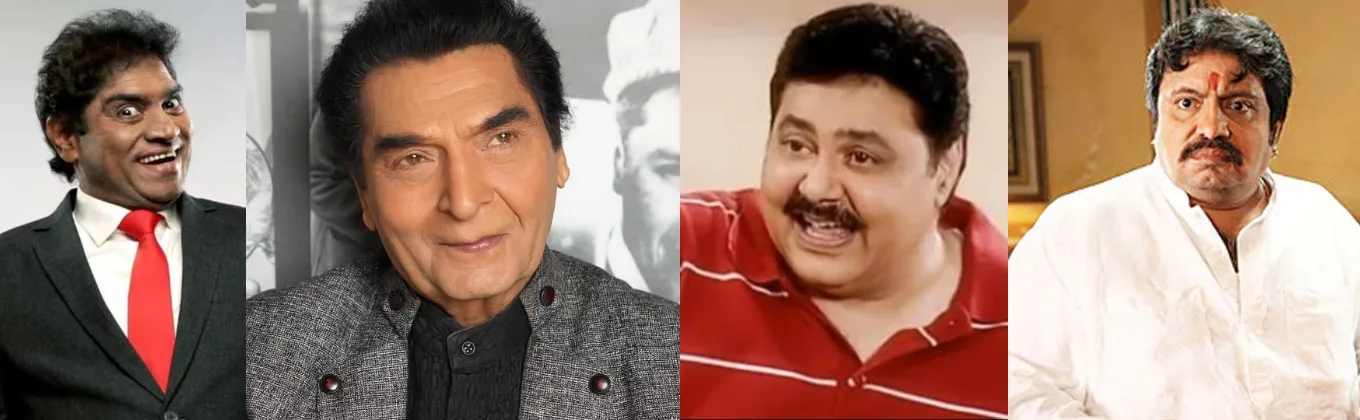
In the early days of Hindi cinema, comic characters were not mere distractions; they were very much part of the movie's rhythm because they were intentionally written into the script. For example, Asrani was not only a comedic actor; his ability to deliver jokes added texture to movies. Satish Shah could completely control an entire film with a single deadpan delivery. Which brings us to Johnny Lever; considered by most people to be the finest comedian in Bollywood history, he provided humour through a physical, manic style that has all but disappeared from the industry today.
The story of how Johnny Lever went from a backstage mimic to one of the most recognised names in India illustrates the value of a well-written comic character to the Indian public. Even today, many people continue to pay tribute to Johnny Lever as a reliable crowd-pleaser. At the same time, the success of his films may have flunked, the fact remains that his scenes will remain etched in people's memories. The collaborations that Lever made with Akshay Kumar embody much of the humour of the 90s to 2000s in Bollywood. However, more important than Johnny Lever's popularity was the space the writers created for him. His characters were given story arcs, motivations, and quirks, which is not something that most current roles of "comic relief" ever bother to provide.
South cinema mirrors the same story. A widely shared article lamenting the disappearance of the “funny man” in Tamil films notes that self-serious heroes have pushed comedians out. Bollywood drifted along the same path. As mainstream movies obsessed over sleekness, aspirational coolness, and hero-driven narratives, a dedicated comic track began to look “old-fashioned.” Ensemble humour replaced individual set pieces. Writers who specialised in comedy aged out or moved on, and few truly replaced them.
Comedy today is squeezed into brief moments rather than woven into the film's DNA. The richness that actors like Asrani or Shah brought—rooted in timing, character, and vulnerability—feels incompatible with today’s risk-averse, image-conscious industry. The disappearance of the comic character isn’t just nostalgia—it’s a sign that Hindi cinema has forgotten how to let humour breathe.
The Missing Writers: Neeraj Vohra & Beyond
Many fans of Bollywood trace the decline of the industry's comic timing to the passing of Neeraj Vohra. Vohra wasn’t just a scriptwriter; he was an expert at blending rhythm with comedy. His screenplays for films such as Hera Pheri, Phir Hera Pheri, and the underappreciated Golmaal series created disorderly and complex characters that few other writers could emulate. In a popular Reddit thread, a user wrote: “Since Neeraj Vora's death, we have stopped making anything worthwhile”. At the same time, this may sound overly emotional, but there is undoubtedly some validity to the statement.
Vohra recognised that situational comedies rely on escalated situations. Escalation is not noisy, slapstick gags, or punchlines, but the emergence from a single circumstance to multiple circumstances. A slight mistake can create an entire sequence of events. A simple lie turns into a maze of obstacles. Vohra's humour didn’t stem from the ridiculous things his characters said; it came from the believably developed lives of his characters. He described his approach to comedy by explaining that all humour arises from either a character's flaw or a character's desire, not from randomness.
Compare that with today’s approach, where humour is often outsourced to dialogue writers. Script first, jokes later. As a result, films feel like a collection of “bits,” not a cohesive comic arc. Instead of writing a world where funny things naturally happen, productions rely on memes, viral one-liners, and improv-based banter.
Dark Humour in Comedy studies has evolved with the addition of New Satire Styles...The way Movies are written these days has changed, with writers engaging viewers/audiences through immorality and Irony, eliciting social commentary and Cringe-Inducing reactions, as compared to considered works (referred to as creative works). Delhi Belly is an example of a comedic format that allows for greater imagination and creativity in writing humour through dark humour. However, these types of movies are exceptions in the Bollywood film industry today. Bollywood has yet to find its future day, Satyajit Ray's, as fewer writers/writing teams create comedy as "choreography", using "sound", rather than just "foolishness".
The Rise of OTT and the Changing Landscape
The rapid growth of the Over The Top (OTT) market in India has had a criminally quick and devastating effect on how people in India view and consume entertainment, especially comedy. As viewers now consume shorter, more condensed forms of entertainment featuring quick punchlines, OTT services have created a massive shift in the comedic experience. This new format has even made it possible for younger generations to find many of their most entertaining moments on social media, where fast-paced, relatable, humorous posts abound.
Significant changes also occurred within OTT platforms, as a new comedic sensibility emerged. Realistic comedy was the first major transformation. Unlike theatrical films and productions where the humour tends to centre around absurd or larger-than-life characters, OTT series lean more towards presenting real or "real-world" humour, through examples of day-to-day life, including; awkward family dynamics, subtle sarcasm, deadpan allusions, and the overall humour found in everyday circumstances (for instance, in films like Gullak & Yeh Meri Family). Research on stand-up comics and how audiences perceive them shows that younger audiences are more likely to support and relate to their favourite comics when they present authentic representations of comedy rather than forced theatricality.
Another shift that resulted from the transition to the OTT market was the decline of comic "sidekick" characters. In many conventional forms of entertainment, comic side characters were often included as comic relief to support the primary character; however, with the development of OTT characters, they no longer fit into that role. In place of this "comic relief," OTT characters can provide comedic insight into their respective story worlds. The new format allows viewers to identify with characters' humour because they span a broad range of subjects and situations. The vast majority of industry filmmakers no longer write dedicated comic tracks to support primary characters within OTT; therefore, they no longer correspond with the current format.
OTT services have also taken over the role of experimentation. While Bollywood prefers a more conservative approach, OTT services have been willing to take on projects such as cringe comedies, dark humour, slow-burning satire, and character-based humour, which would have had difficulty finding an audience in a theatrical setting. In fact, several articles have pointed to the oversaturation of OTT services driven by a focus on crime dramas and thrillers; however, when comedy is done right, it can build a loyal fanbase by delivering a consistent product.
The economics of making comedies differ as well; there are no guarantees of significant theatrical returns for comedy, whereas there are for large action-genre movies. Most studios would rather spend ₹150 crores on creating a large-scale action-thriller motion picture than invest in an original comedy screenplay that would only yield a small profit for its creators. The mid-level commercial comedies that once thrived are dwindling.
While the OTT format enabled comedy to evolve, it also stole audiences from theatre-based comedy. People didn’t stop having a sense of humour; they just found a new outlet to express it in. The $64,000 question is, will Bollywood ever figure out how to reintegrate into this new normal?
The Ugly Side: Shaming as a Comic Device
Despite all of its changes, Hindi cinema has held onto one of its oldest technologies: punching down. Fat-Shaming, skin colour jokes, queer-phobic humour, body stereotyping, and regional mocking are still, sadly, mainstream comedy staples, even as audiences have become increasingly vocal about wanting representation. Much of the humour in Bollywood still relies on the lazy route of mocking people for their looks or identities, rather than creating humour that arises organically.
Characters who are fat are often portrayed as being either excessively hungry (and foolish) or clumsy. Characters who are dark-skinned continue to be burdened with “kaala” one-liners. Queer-coded characters only ever appear to trigger punchlines (through effeminate gestures, deep voices, or confused desires), never as authentic individuals. The queer experience is most often treated as either a source of fear or laughter, and the trope has been around for quite some time; it remains an ever-present part of the humour landscape in films.
Why does this continue? Because lazy humour is easy to generate, and Bollywood’s writing ecosystem rewards speed over nuance. Articles criticising the state of comedy point out how writers often rely on stereotypes because they require no backstory, no arc, no clever setup. And audiences—trained for decades to laugh at such jokes—sometimes accept them uncritically.
But this reliance on shaming has larger consequences. Real comic talent struggles to flourish in such an environment. Situational comedy thrives on intelligence, not insult. Writers who want to create layered humour get sidelined. Casting directors hunt for “funny-looking” performers rather than performers with impeccable timing. Meanwhile, comedians who rely on actual craft—rhythm, observation, escalation—get lost behind caricatures that dominate the screen.
A Times of India article discusses the existing content issues in Bollywood and the demand for higher-quality content from audiences. The decline of comedy in Bollywood has sparked significant discussion on Reddit, where users expressed exasperation with Bollywood’s failure to break free from stereotypical storytelling. Milestone101 states that Bollywood has "destroyed" comedic storytelling by utilising the lowest common denominator instead of advancing the comedic arts. Reehub's articles illustrate how stagnation within the comedic genre is pushing emerging talent out of Bollywood's mainstream and towards OTT services or stand-up comedy.
The tragedy is that shaming disguised as humour is not only obsolete but is also a sign of stagnation. This stagnation stifles innovation, limits the comedic genre to its former glory, and alienates many viewers seeking more intelligent, more compassionate writing. Until Bollywood's producers prioritise writing styles that are not only intelligent but also honour both their audience and their characters, comedy will continue to diminish in value.
Newcomers & The Shift in Today’s Comedy
In a time when traditional/mainstream cinema is failing, a new wave of actors, writers and comedians is redefining what it means to be funny. Many of these new talents have originated from either practical (live) performances/stand-up/ comedy clubs, or other venues where authenticity and storytelling are cultivated rather than performed as a stereotype. The mantras of social media, clumsy (or awkward) self-awareness, and personal history are what these new comedians bring to their comedy (e.g., their comedic language).
OTT platforms have provided a breeding ground for the new breed of comic. OTT shows (e.g., Gullak, Yeh Meri Family, Jaadugar, Panchayat) and even films (e.g., Dream Girl) sensibly shift comedic depictions into everyday life – awkward phone calls, neighbourhood politics, character idiosyncrasies, workplace banter, etc. The comedic treatment depicted represents the lived experience of individuals rather than a performance.
Research on the evolution of comedy shows that younger generations have transitioned away from slapstick and toward more irony, cringeworthy moments, subtlety, and dark humour. Younger audiences enjoy characters who can unintentionally be humorous because of their nature and personality, rather than those forced into comedic roles.
The evolution of the new comedic movement is being led by writers who view this genre as more than just filler, but rather a core component of the plot. Most, if not all, OTT writing rooms are composed of comedians who are naturally gifted at finding humour in everyday confusion; thus, they add depth and honesty to the stories. Once the comedians transition to the mainstream film industry, they will bring a unique, differentiated creative approach that starkly contrasts current Bollywood templates.
This shift also marks the end of the “one comedian per film” era. Today’s humour is ensemble-driven. Everyone contributes—parents, siblings, bosses, side characters. Comedy becomes communal, not concentrated.
It doesn’t mean slapstick or situational comedy can’t return. But the new generation shows that humour can evolve without losing its heart. Bollywood only needs to let them in.
Ten Films With Superbly Written Situational Comedy
Delhi Belly (2011)
A unique Hindi comedy film that utilises chaos as a storytelling device rather than simply as an extra gimmick for added fun. The film’s humour is drawn from continuous misadventures, horrible timing on the part of its characters, and the fact that, while trying to correct one incident, they inadvertently create another. The film has incorporated its joke as part of the storyline, with the intent of maintaining a sense of urgency; filling the movie with more jokes may result in lowered suspense, and therefore limit the opportunity to keep the comedic pace of the film intact since the film never stops to provide context or explain its jokes; instead allowing the viewer to keep with the film's pacing. The film features bold writing, unapologetic dark humour, and electric performances, making Delhi Belly a definitively confident example of a situational comedy produced in India.
Hera Pheri (2000)
The beauty of Hera Pheri lies in how its humour grows from desperation, innocence, and sheer human folly. Baburao, Raju, and Shyam don’t try to be funny; they simply respond to a string of misunderstandings with complete sincerity. Their motivations are simple—money, survival, dignity—and that’s what makes the comedy so rich. Every mix-up feels rooted in character rather than contrived setups. The writing gives each actor space to shine, turning even small moments into iconic beats. It’s situational comedy in its purest form, powered by timing, chemistry, and a script that understands the value of tension.
Welcome (2007)
Welcome works because it builds a world where gangsters act like fragile performers trying to rebrand themselves. Majnu and Uday’s attempts to appear respectable create a domino effect of absurd situations. Nothing is subtle here, yet the chaos is tightly choreographed. Scenes escalate with delightful inevitability, and every character behaves as if their bizarre circumstances are entirely normal. That earnestness makes the madness believable. The humour comes not from randomness but from characters trapped in situations they clearly can’t handle, producing a film that showcases how exaggeration, when rooted in clear motivations, can still be brilliant situational comedy.
Golmaal (1979 / 2006)
1979 Golmaal emphasises linguistic humour, mistaken identity, and human characteristics. Hrishikesh Mukherjee’s delicate humour gives it charm and warmth. The 2006 remake of Golmaal is an energy-packed ensemble piece using chaos, physical comedy, and over-the-top characters. That said, both films are built on a similar foundation – they both feature confusion that eventually spirals out of control. Despite these two different approaches to situational comedy, both films illustrate how it can evolve while still maintaining the fundamental elements of characterisation and timing.
All The Best (2009)
All the Best is an example of how frantic storytelling can create a strong comic rhythm. The entire film revolves around lies—small lies, big lies, lies told to cover earlier lies—and the escalating panic that follows. Characters are stuck in situations where every solution makes things worse, letting the humour build naturally from panic and improvisation. The writing keeps the stakes high, so the comedy never deflates. Despite its loud exterior, the film is surprisingly disciplined in how each gag connects to the next, making it an underrated but effective situational comedy.
Chupke Chupke (1975)
This timeless film showcases the very definition of elegance and is based on clever misunderstandings and witty language. Dharmendra's character, a professor who becomes a cab driver, sets off a chain of gentle mischief, as everyone treats these small deceptions with utmost seriousness. Hrishikesh Mukherjee balances warmth and comedy as he brings the characters to life, creating humour that resonates with the audience as the plot grows in complexity. The film’s writing shows respect for the audience's intellect while creating some of the most memorable situational comedies in Hindi cinema, demonstrating that simplicity, clarity, and charm can make such situations.
Jaane Bhi Do Yaaro (1983)
A cult masterpiece of satire and escalating absurdity, Jaane Bhi Do Yaaro blends slapstick, political commentary, and situational chaos with unmatched precision. Nothing in the story is random; each scene pushes the characters deeper into corruption and confusion. The famous Mahabharata sequence works because it takes a profound cultural moment and throws desperate characters into it, turning order into farce. The humour is dark, sharp, and purposeful, pointing at absolute societal rot while keeping the narrative fast and unpredictable. It shows how situational comedy can carry enormous thematic weight without losing its comic bite.
Andaz Apna Apna (1994)
This movie is a complete whirlwind of absurdity because the characters are fully committed to their actions, providing audiences with laughter throughout. Amar and Prem find themselves stuck, creating messes for themselves while also dragging an entire ensemble of quirky supporting actors into every scene. The comedy develops from every decision made by the characters, leading them into more ridiculous circumstances than before. The film's highly quotable nature arises from the tight connection between its dialogue and visual elements. It continues to have life in 2023 as a piece of lunacy built on a structured rhythm, with cutting-edge playfulness that has yet to be recreated in the Bollywood film industry.
Bheja Fry (2007)
Set primarily in one apartment, Bheja Fry proves that situational comedy doesn’t need scale—just sharp contrasts. Vinay Pathak’s Bharat Bhushan is a kind, oblivious man whose enthusiasm becomes a nightmare for Rajat Kapoor’s arrogant host. Their clash of personalities builds a slow-burning comedic tension that keeps tightening as the night gets worse. The film’s single-location structure forces the writing to be clever and character-driven. The humour comes from how each person reacts to discomfort, ego, and well-intentioned chaos, creating a chamber comedy that is both sharp and unexpectedly empathetic.
Khosla Ka Ghosla (2006)
The humour in this middle-class sitcom stems from a group of normal people as they interact with an extraordinary crook. There are misunderstandings and little triumphs, along with moral dilemmas, all grounded in real life and easily relatable to any family. Anupam Kher's portrayals convey vulnerability, Boman Irani’s characters are full of brashness, and the ensemble cast acts believably together, which makes the entire setting feel very real. The humour is subtle at times, but is also consistently woven into family relationships, typical character quirks in society and clever schemes. It never seems as though they are trying to be exceptionally humorous with their material; instead, their writing is character-driven, and they rely on their characters' emotions to provide warmth and a lasting comic experience!
The Missing Funny Bone: Bollywood's Struggle to Keep Situational Humour Alive
The loss of Hindi cinema's situational-comedy tradition is creative and cultural.
For years, comedy was an integral part of Bollywood's DNA. Some of the most famous Bollywood characters of all time—like Arvind in Chupke Chupke or Baburao in Hera Pheri—were memorable not because they were goofy or had absurd tendencies, but because they were relatable, flawed individuals in everyday life.
As comedy continues to shrink, so does the available space for this type of character: only those who fit into very niche categories of humour (such as OTT or Stand-Up) are deemed worthy of screen time. No longer do families eagerly attend theatre screenings to experience masses of laughter. Family-style viewing, including talking, laughing, sharing and recalling comedy-related lines across generations, continues to decline.
Another resurrection narrative can be found in industry articles about Bollywood's decline in theatrical output. In the past decade, there has been significant overcrowding in the types of films released and a notable increase in the kinds of movies being produced. Films of a particular genre, for instance, action, thriller, and biopic, dominated box-office releases, and middle-ground films (e.g., comedy, drama/slash-of-life, mid-budget comedies, etc.) have mainly become non-viable.
The shift in Bollywood filmmaking has widened the gap between audience tastes in movies and what Studios support. While OTT has attempted to fill this void, the OTT marketplace has also introduced problems of its own: It has created too many shows, which leads to confusion about what makes each show special (i.e., distinctively funny).
According to a Times of India article on the Current Content Crisis, even streaming platforms now face too many options for consumers, leading to consumer fatigue.
Therefore, the Comedy genre has lost its way and is now midway between Two Worlds. The Comedy genre is not currently actively supported by Theatrical businesses; there is no longer a comprehensive support structure for Comedy on OTT; the New Talent is not yet established or known; the Audience is very different and growing, still seeking out clever, situational humour, but unable to find it in this era.
As a result, there are many unanswered questions about the future of Comedy as a sustainable, meaningful art form in India: The old guard is fading, and the new guard has not yet secured mainstream support from Theatrical and OTT businesses.
The Takeaway
Comedy isn’t dead. It has simply migrated. Theatrical Bollywood may have drifted away from the kind of sharp situational humour it once excelled at, but the instinct to tell funny, clever, character-driven stories is alive elsewhere. You see it in the writers’ rooms of OTT shows, where stories have room to breathe, and jokes aren’t forced into formula. You see it in stand-up, where performers unpack everyday frustrations with a kind of honesty Bollywood rarely attempts. And you see it in reels and short-form sketches, where younger creators play with timing, awkwardness, and cultural quirks in ways that feel fresh and rooted in the present moment. Comedy hasn’t disappeared; it’s simply thriving where creators are free from old rules.
Even so, the future of big-screen comedy isn’t bleak. Bollywood has reinvented itself many times, often when the audience least expects it. Suppose the industry chooses to pay attention to writers who understand rhythm, to viewers who want humour without cruelty, to performers who bring nuance rather than loudness. In that case, situational comedy can return stronger than before. The way forward is straightforward: invest in writers who specialise in humour, take risks on unconventional ideas, rethink casting so comic roles aren’t limited to caricatures, and drop tropes that hinge on fat shaming, queer shaming, or skin-tone jokes.
Situational comedy isn’t some bygone art. It’s a craft built on observation, tension, timing, and empathy. And India, with its messy contradictions, noisy streets, and constant swirl of personalities, is an endless reservoir for comic storytelling. Bollywood only needs to recognise the talent already working in its shadow—and relearn how to laugh with its characters, rather than at them.
2022 © Milestone 101. All Rights Reserved.