STAY CURIOUS
Keep reading to find the excellency out of perfection and skill.

By: Milestone 101 /
2025-12-10
hollywood
Versace by Prada: The New Empire of Italian Glamour
A deep dive into Prada’s acquisition of Versace and what it means for Italian fashion. This article explores heritage, power shifts, brand identity, and global luxury politics, examining how minimalism and maximalism collide to reshape the future of glamour, craftsmanship, and cultural influence.
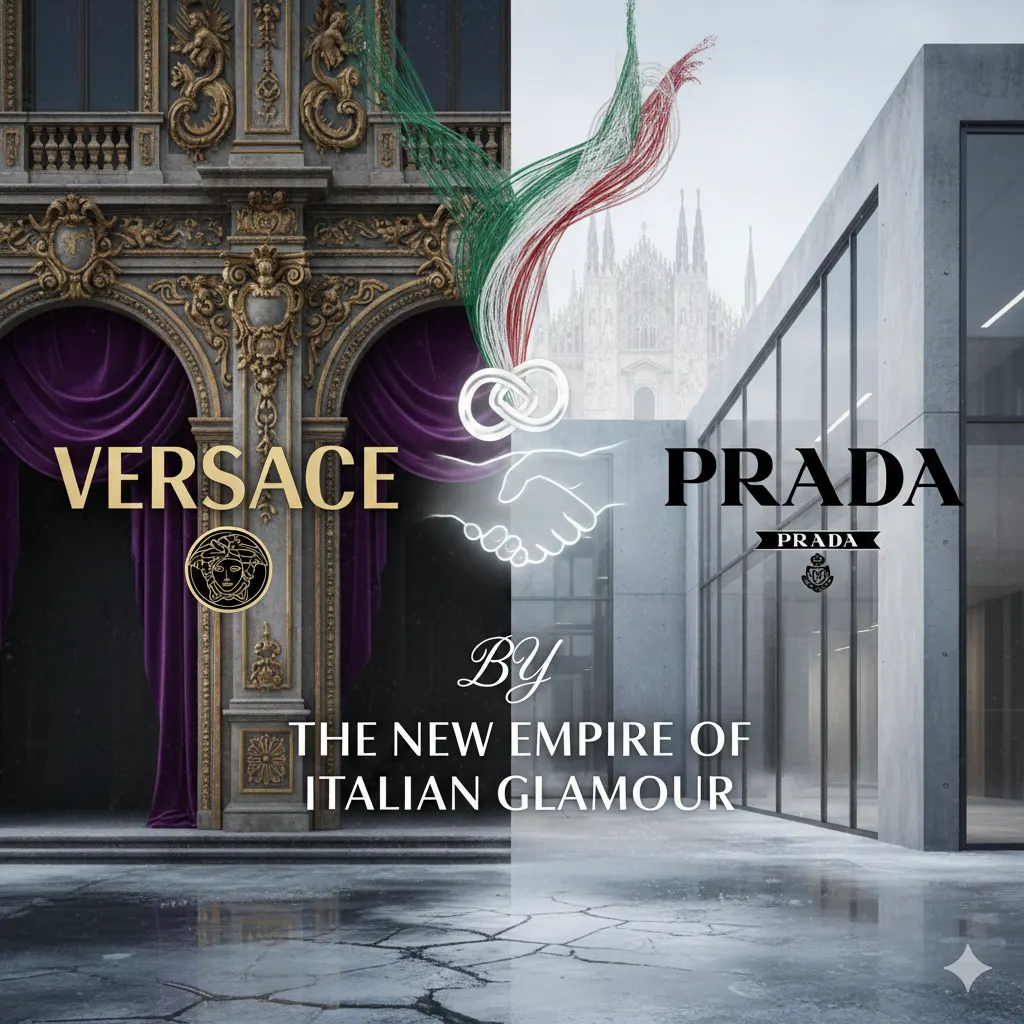
Two very distinct types of glamour came together on a frosty morning in Milan as two companies shook hands, signed contracts, and became one. Prada has taken its quiet, understated, luxurious approach to creating fine art with respect for fine luxury into an entirely different realm by buying Versace. This exciting, dynamic fashion house creates a global language of sexiness.
This is not simply a change in the corporate structure; rather, it reflects the merging of two distinct aesthetics with the long-standing Italian traditions and sends a message to the fashion world about the future positioning of Italian fashion in the next century. The future impact of this merger will be felt throughout the industry in terms of fashion heritage (Italian glamour), fashion creativity (two separate yet co-existing brands), and renewed competition from the new Italian company against French fashion companies.
Can minimalism and maximalism coexist without one swallowing the other? Can heritage survive scale? And can Italian fashion, long shadowed by Paris-led luxury empires, use this moment to reclaim cultural and commercial dominance on the global stage?
This article explores what the merger means in the fashion world.
Two Houses, Two Languages: Origins and Aesthetic DNA
Prada and Versace are textbook contrasts — not just in style but in origin stories.
The history of Prada dates back to 1913, when Mario Prada opened a leather goods store in Milan, Italy. Up until recently, Prada was an Italian family-owned business that operated under the radar. However, it began to change when Miuccia Prada and, later, Patrizio Bertelli came into the picture, creating a strong intellectual image for Prada based on minimalist yet elegant designs and fabrics considered unusual for the time. Rather than flaunting its brand name, Prada developed an aspirational image through subtlety, which was at times austere and studied, yet always strongly shaped the image of what has been termed ‘quiet luxury’ in fashion over the past decade. In terms of identity, Prada embodies a cerebral aspect; it has been termed ‘thoughtful design’ instead of ‘spectacle'.
Versace, a brand founded by Gianni Versace in 1978, challenges the idea of fashion restraint. Gianni's style was characterised by dramatic, flamboyant clothing, utilising bright neon colours, elaborate prints, and Medusa motifs. Gianni turned the catwalk into an exciting occasion, turning it into parties and creating a buzz in the fashion industry through media coverage of his fashion shows and, later, the creation of celebrity gowns on the red carpet. After the tragic death of Gianni in 1997, Donatella Versace inherited the Versace name and brand, giving it its own signature style and personality through its unapologetic glamour and association with celebrity culture. The DNA of Versace is based on excess, which is sensual, overtly maximalistic, and wants instant gratification.
Both houses were family-built, and both turned family history into brand mythology. For Prada, the Bertelli–Prada partnership is a modern family business that marries creative and commercial savvy. For Versace, the brand was inseparable from Gianni’s auteur persona, and later Donatella’s stewardship. That family imprint matters: luxury customers buy more than products; they purchase stories, lineage, and authenticity. The question now is whether two such different stories can live under one roof without losing their particular voices.
Where They Were Standing: Recent Histories Before the Deal
Understanding the context of this acquisition is key. Before its acquisition, Versace faced many challenges as it attempted to reignite its brand and recapture the commercial success it had previously achieved. Although Versace maintained a significant cultural presence and generated widespread press coverage, the brand suffered multiple years of losses due to rapidly changing consumer purchasing habits and the ongoing impacts of the pandemic. Capri Holdings, the United States company that purchased Versace for approximately 2 billion dollars (not US dollars) in 2018, was unable to establish a consistent growth pathway for the Versace brand. Additionally, by expanding its sales base into broader markets, it diluted its already established niche, and various management changes have hindered its ability to return to the sharp creative and operational cadence established by Gianni.
On the other hand, Prada was comparatively steady in comparison to Versace before the acquisition. For many years before and during the pandemic, Prada continued to grow while much of the fashion industry struggled. By owning a portfolio of brands, Prada, Miu Miu, Church's, Car Shoe and now Versace, Prada has greater flexibility in terms of revenue sources, as well as greater operational capacity. Prada's relatively healthier financial position and positive trends, versus Versace's much weaker performance, allow it to strategically acquire iconic but troubled brands, invest in them, and turn them back into growth brands. In general, this framework for acquisition drove the strategic rationale for this acquisition.
The Acquisition: Facts, Mechanics and Strategic Rationale
The headlines are simple: the deal was announced in April and closed in early December. The price tag has been variously reported around €1.3–1.4 billion (roughly $1.5–1.4 billion in some coverage), with Prada purchasing Versace from Capri Holdings and committing to keep Versace’s creative leadership visible while installing new operational governance. Lorenzo Bertelli will be named to a leadership role overseeing Versace’s integration. At the same time, Donatella Versace will remain as brand ambassador — a hedge to reassure customers and insiders that the house’s creative signal remains intact.
The acquisition of Versace by Prada has a strategic rationale articulated into three broad categories. The first is the scalability and immediate access that Prada has to one of the top fashion houses in the world, with considerable global visibility, through distribution channels that blend with Prada's existing distribution. Secondly, there is this idea of adding additional diversity to the overall product range and creative style.
Much like Prada's cerebral approach to designing, Versace's more baroque and theatrical approach does not overlap with Prada and thus creates minimal risk for direct competition while at the same time opening many new channels for growth and appeal for both the companies involved. Thirdly and perhaps most critically, there is a strong political and cultural sentiment that surrounds this deal for both the Italian and American markets; a major Italian cultural property is going back to Italian ownership, thus creating a potential competitor to the large French conglomerates such as Kering and LVMH, but also creating a formidable Italian luxury brand. There is a strong sense of patriotism within the industry regarding this deal; creating an Italian-based luxury company will ultimately lead to better product quality through Italian design rather than any other national influences.
Can Maximalism and Minimalism Coexist? Cultural and Brand-Identity Questions
This is the creative heart of the story. Can two opposed aesthetics be managed without flattening one into the other?
In the luxury environment, holding the brand custodian is a balancing act. While pragmatic integrations can sometimes provide financial support from larger groups, the aesthetic aspects are always at risk. What attracts customers to a brand is usually its creativity and strong identity — just think of Versace, which attracted its followers with its over-the-top designs rather than a diluted version meant for mass appeal.
Prada's public communications support the concept of creative autonomy for Versace's creative director, Donatella Versace. Still, in practice, market forces — including required inventory levels, gross margin targets, and growth targets— are at play. Therefore, there is an inherent tension regarding how much Prada will encourage Versace's creative design model as a creative universe in its own right — with autonomous design teams, distinct marketing budgets, and runway presentation — versus as a high-margin revenue stream that will need to be more standardised to the Prada way of consumer engagement.
If handled well, the pairing could be symbiotic: Versace’s theatricality could inject cultural dynamism and celebrity cachet into Prada’s broader group, while Prada’s operational rigour can stabilise Versace’s finances and supply chains. The danger is the sanitisation of Versace into a toned-down echo of itself — a fate that has befallen other acquired brands when corporate priorities overshadowed creative daring.
Consolidation and Power Shifts: The Deal in Historical Context
For decades, luxury fashion has gone through cycles of consolidation with companies like LVMH expanding through acquisitions (Louis Vuitton, Dior, Fendi, and other brands) and Kering acquiring more brands. These consolidation waves have shifted power among Europe's major fashion hubs (Paris, Milan, and London). Traditionally, luxury brand consolidation has been based on financial resources (centralising purchasing operations, expanding international retail presence, and increasing advertising budgets) as well as cultural curation, through brand portfolios that offer customers multiple price points and design aesthetics.
The significance of the acquisition was that it demonstrated an Italian company creating an Italian empire rather than an Italian company being absorbed into a French parent company. This acquisition returns some financial resources from France to Italy. The merger signifies a shift in the luxury landscape, with Italian companies becoming more competitive against their European counterparts, primarily as they focus on enhancing their design aesthetic and manufacturing capabilities by investing in their workforce, infrastructure, and supply chain. Analysts believe that the creation of a "made in Italy" renaissance is possible if the new company invests in the same core elements that contribute to its brand value: craft-based manufacturing, family heritage, and a creative ecosystem.
Putting this deal beside other iconic acquisitions sharpens its significance. When LVMH bought Dior or when Kering acquired Gucci’s rivals, the result was often an infusion of capital and global machinery that helped brands scale beyond their historical markets. But those conglomerates also homogenised certain commercial practices across houses. Prada’s move is different in tone: it presents as a consolidation with a preservationist narrative. Whether the outcome resembles LVMH’s efficient empire or a new, distinctive Italian confederation remains to be seen.
Manufacturing, Supply Chains and “Made in Italy” Authenticity
One of Prada's pragmatic advantages is operational muscle: manufacturing relationships, quality control, and logistics. Versace will rely heavily on its ability to rebuild a reliable supply chain and deliver consistent products. By integrating Versace into Prada's manufacturing ecosystem, and keeping Versace’s Italian manufacturing, there can be an enhancement to the quality control, in-country production, and preservation of "Made in Italy," which many premium consumers value. Furthermore, through economies of scale in sourcing, vertical integration in leather and shoe production, and enhanced coordinated distribution strategies, the level of cost savings could support additional investment in the genesis of creative labs, marketing, and brand storytelling.
However, there is a sensitivity component: customers are well aware when production shifts from heritage workshops to centralised lines. Maintaining provenance and heritage — artisanship, small ateliers, artisanal processes, and local supply nodes — must be balanced against the advantages of operating in a larger group. Prada must find a way to leverage its established operational scale while sustaining the artisanal narrative, which is critical to the value and prestige associated with luxury products.
The Glamour Gamble: What Could Derail the Prada-Versace Dream
Every major merger carries downside risks, and fashion is no exception.
Brand dilution: If Versace's creative output is determined by profit targets, the passion and emotional nature of its production would be limited. The loss of those characteristics may result in the company losing its current clients who purchase products under the promise of spectacular experiences.
Creative clashes and talent turnover: Changes in leadership within Versace have already begun. We've already seen some industry leaders depart, and the appointment of the wrong person, or the loss of significant design talent from a design house, could lead to a speedier decline rather than prevent it. Industry reports on the current executive reshuffle at Versace are early warning signs of potential harm to the brand.
Customer alienation: Versace's consumers are not the same as Prada's, and if the new owners attempt to create a single commercial strategy that incorporates both brands, there is a good chance neither brand will be well served by it. Versace's premium customers want to receive distinct products from a luxury brand, while a generic "luxury" label does little to excite current or potential consumers.
Overexpansion and operational friction: Rapidly expanding product categories by adding more product lines and accessories without taking the time and diligence to curate them will result in less exclusivity within each category. When Versace is found everywhere, it loses the rarity that gives it desirability at the top tier of high-end/mid-end luxury.
Cultural missteps: Integrating the differing cultures of a company's various divisions is much more complex than integrating different business technology systems after they are incorporated. When there is misalignment among individuals within the creative, marketing, and boardroom divisions, it creates confusion about the brand's voice and strategic direction.
These risks aren’t hypothetical. They’ve played out elsewhere when conglomerates prioritised short-term margins over long-term cultural capital. Prada will need to guard against those temptations.
The Perfect Union: What a Prada-Versace Victory Could Look Like
A best-case scenario is compelling and realistic if managed strategically.
Revived Versace, authentic and bold: Prada has made a capital investment in Versace's Creative Labs, allowing Versace to maintain its independent runway identity, tap into new channels to reach younger audiences worldwide, and continue its artisanal production. Versace is once again commanding the highest levels of foot traffic at the red carpet and celebrity events.
An Italian luxury confederation: The merging of Prada's operational excellence with Versace's brand equity creates a possible polar opposite portfolio to the French conglomerates. With the two representing the rebirth of Italian luxury, the new Italian brands will provide the aesthetic and operational capabilities needed to compete directly with Parisian luxury houses.
Sustainable scale, not mere expansion: If the group maximises economies of scale to create sustainable supply chains and develop small-batch artisanal workshops for new product development, they would continue to build a business with the resiliency to withstand the ongoing paradigm shift of modern-day luxury consumers toward ethics and social responsibility in tandem with style.
Cultural cross-pollination: Prada's manufacturing discipline could provide the foundation for Versace to invest in larger-scale storytelling and cultural activation; conversely, Versace's flamboyant, theatrical approach could motivate Prada's product and service offerings through artistic engagement and participation.
These outcomes require patient capital, a hands-off approach to creative direction, and a willingness to accept slower returns in exchange for durability in brand equity.
The Takeover in a Larger History of Luxury Acquisitions
When considering the significance of this acquisition, it is helpful to look at the many previous significant acquisitions in the fashion industry (some of which may have involved fashion groups' own dealings) and how they transformed the industry's ownership, distribution, and narrative control.
Unlike these other transactions, which were essentially a means for private equity companies and multinational groups to consolidate their power and leverage their investment funds through joint venture or subsidiary acquisitions, the acquisition of Prada vs. Versace is more about providing an alternative avenue for competitive and culturally congruent Italian-style heritage brands.
This acquisition will not only challenge the dominance of the French conglomerate LVMH, but it also presents a unique opportunity to create an Italian alternative to the French model, using similar techniques to build on a rich heritage through storytelling, craftsmanship and audacious design languages that highlight all the brands under this new constellation of Italian heritage brands. If executed properly, this new Italian heritage brand could inspire new forms of consolidation across Europe, as well as revitalise the notion that a heritage brand can take on new shapes while preserving its rich history.
The Takeaway
This isn't just a merger. It's a shift in power, identity, and ambition. It should be seen as an act of industrial strategy, cultural stewardship and national symbolism. It’s an experiment in scale with soul, an attempt to harmonise two divergent creative orbits without erasing either. The new group has the potential to reshape the balance of power in global luxury, elevate the authenticity of “Made in Italy,” and create fresh fashion narratives that combine intellect and spectacle.
Success is not something that happens automatically. This is where you begin the real work of protecting creative independence: investing in artisanal production methods, steering clear of the 'average' consumer trap of creating a series of homogenised product lines, and, most importantly, understanding what luxury consumers are now demanding (younger, more diverse, value-driven). The partnership between Prada and Versace has the potential to produce a rebirth or revival of Italian fashion - not from a domination/takeover perspective - but from celebrating and amplifying the voices of two of the most important designers in Italy.
In luxury goods, cultural capital is still a key factor. You cannot simply throw money at distribution and/or infrastructure and expect to grow the brand. You need care and integrity to sustain the brand's mythology. Through partnership, Prada and Versace are betting their heritage (with time, respect and patience) to build a new empire of Italian glamour.
2022 © Milestone 101. All Rights Reserved.