STAY CURIOUS
Keep reading to find the excellency out of perfection and skill.

By: Milestone 101 /
2026-02-25
bollywood
Why Alia Bhatt's BAFTA Namaskar Was Viral, Not Historic
Alia Bhatt’s “Namaskar” at the BAFTAs quickly became a viral talking point, celebrated as a proud cultural moment. But does a brief greeting equal history? This article examines the difference between internet virality and genuine historical change in global cinema, separating emotion from measurable impact.
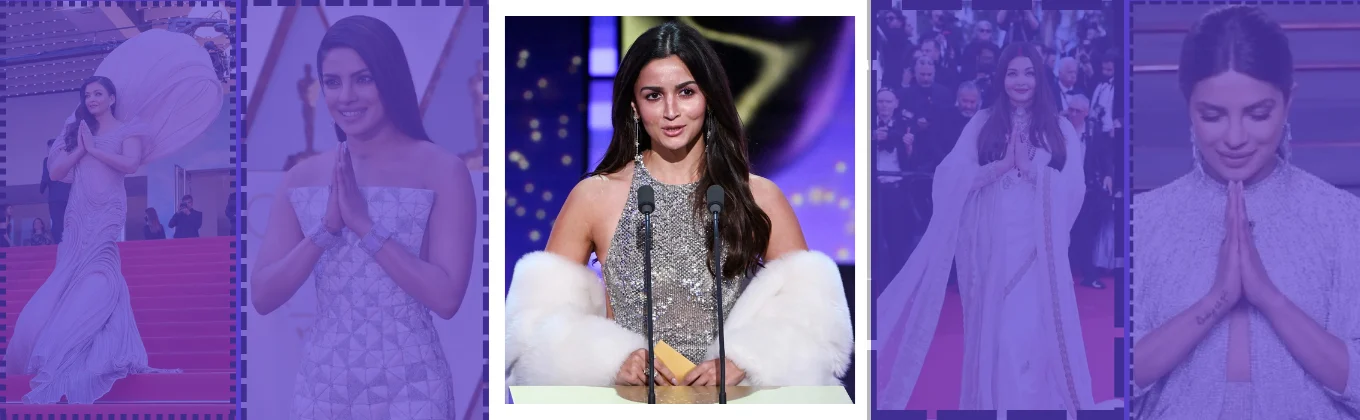
When Alia Bhatt took the stage at the BAFTAs to present the award for Best Film Not in the English Language, she said 'namaste'. She used both Hindi and English before her clips were shared online, including on Instagram, X, and YouTube, with fans declaring this moment a proud statement of Indian identity on a globally celebrated platform and saying she had made 'history'.
The entire display was polished, sophisticated, and ideally timed for the cameras. However, despite how quickly and widely it went viral, it misuses the term 'historic.' Virality is related to speed and volume, whereas 'history' usually connotes something that will have long-term ramifications. They are not synonymous.
The Mainstream Media Reaction
After the event, many sources published articles describing the moment of the two actors meeting as a success for Indian culture; Bhatt was perceived as a symbol of Indian pride because she brought recognition to the Hindi language on such a large stage in world cinema. Many were impressed by how easily she moved between the world of international glamour and still expressed herself in a way that reflected who she was at home in India. The overall tone in the articles was one of confidence and an ability to reach a global audience. Very few comments contained anything other than hearts and/or flags.
Social media exploded with immediate and emotional responses to this phenomenon. Fans shared the video, along with captions that described representation and belonging, while several actors (including Samantha Ruth Prabhu) used their own platforms to celebrate Bhatt's greeting. In the hours after the event, various portions of the video were cut to create a trending phenomenon, enhanced by music and slow-motion edits. Although the two actors met for only a few seconds, the image of them embracing is likely to define Bhatt's appearance at BAFTA for some time to come.
For many viewers, the symbolism felt personal. Seeing Hindi spoken at an event associated with British cinema carried emotional weight, especially for a diaspora audience accustomed to code-switching between cultures. In that rush of pride, the word “historic” began to appear as shorthand for how it felt, even if it did not quite describe what had actually happened.
The Illusion of a Historic First
An opinion article in ThePrint offered a robust rebuttal to the many claims that the time is a unique and exciting moment for Indian culture. The piece argues that, while the moment was enjoyable and culturally meaningful, it is neither unprecedented nor groundbreaking, nor structurally transformative in any empirical sense. Its main argument is as follows: Saying "Namaskar" on a teleprompter during an international awards ceremony does not qualify as a historically defiant action or culturally innovative act. It was simply one of many scripted parts of a larger, more orchestrated presentation segment; there was nothing rebellious about this action, nor was it spontaneous or unplanned.
The critique also reminded readers that international awards stages have long accommodated native languages without drama or novelty. Roberto Benigni accepted his Oscar in Italian. Penélope Cruz has spoken Spanish in her speeches. Bong Joon Ho addressed the Academy in Korean during Parasite's historic run. None of those instances was framed as isolated acts of national assertion; they were natural extensions of artists speaking in their own languages.
There's another reason to complicate the narrative of film stars representing their country: Bhatt's citizenship was British; her gown was made by an Italian luxury house, highlighting how global celebrity culture has already been completely globalised. In that regard, the "moment" at the Oscars was more about a transnational star working in an entirely transnational celebrity ecosystem than it was "East meets West". The amplification - as the article states - demonstrates more of an enormous "thirst" for symbolic victories online than an actual "seismic" shift in the way Indian films are perceived on the world stage.
Counterarguments and Nuance
This particular instance does not render the moment any less valuable. Many Indians who watched the ceremony from their homes had reason to feel validated when they heard Hindi spoken at an event traditionally associated with British cinema history. It was an opportunity for the global community of Hindi speakers to have a shared experience with something other than English, which is present in worldwide media.
The presence of Indian entertainers on international movie and award show stages continues to grow, so too does the number of temporary touches that can even create emotional excitement. In this context, Bhatt’s participation can contribute to this larger picture of the crossover and movement forward. However, a symbolic sign is not the same as an entity's transition through past evolution; therefore, when we examine a past event through a viral video, pride may be established, but the experience will not automatically change the space that emerges.
Historical and Cultural Context
To see what constitutes "historic", look for events that changed not timelines but trajectories. When Parasite won best picture at the Oscars, it was not simply an instance of virality; it was also the first time a non-English-language film won the top prize at the Academy Awards and shifted the way people view global storytelling and award politics. Additionally, when Indian films win awards or receive nominations in major international categories at Cannes, they gain more institutional recognition in multiple tangible ways.
Indian cinema has appeared on global stages before, whether through festival premieres, Oscar campaigns, or cross-border collaborations. These moments accumulate into influence when they lead to funding, distribution, and sustained critical engagement. A greeting, no matter how warmly received, does not in itself recalibrate industry structures. It exists within the spectacle of awards night, which is designed as much for shareable moments as for institutional milestones.
For more than a decade, global star Priyanka Chopra has regularly greeted Western media with a folded-hands namaste pose on red carpets, talk shows, and international press tours. Long before social media had taken flight in popularising this gesture as an innovative act, she used it as part of her persona while promoting her films in Hollywood. It was developed to create warmth, connection, and a sense of familiarity no matter where she was around the globe; thus, it has always been a part of how Priyanka has consistently and confidently said hello to others across continents.
Similarly, the iconic Aishwarya Rai Bachchan has maintained her folded-hands greeting throughout many of her appearances at the Cannes Film Festival and other significant Western events, incorporating both the glamorous couture elements and the unmistakable symbols of Indian culture. Her presentation of those global red carpets has been framed as beauty and pride; however, they have not been portrayed as instances of altering the course of history through a single action.
Virality, PR, and the Inflation of Language
The rate at which the BAFTA clip has been shared indicates how we currently share and interact with media. Social media rewards immediacy and emotional clarity, and a brief gesture that is part of our cultural understanding can easily fit into this model. The ability to clip, caption, loop, and recontextualise a moment so it can be used to represent pride can happen within seconds. The public relations ecosystem can further develop the shared story, and many media companies will follow suit, mirroring the trending tone in their coverage. As a result, words evolve quickly (e.g. “sweet moment” becomes “historic achievement”).
In this cycle, words are inflated. The term “iconic” is now used instead of “memorable,” while “historic” is now used instead of “noteworthy.” These definitions are important, as history indicates that there was an event before and after, with a measurable change. Virality means you are just visible. While they share some characteristics, they are not interchangeable. Therefore, if every video clip that gets amplified is designated a historic event, the classification would have lost its relevance for distinguishing true moments of change.
National Pride Versus Structural Change
National audiences sometimes place their communal hopes on individual stars, especially when these individual stars perform on Western platforms that previously felt so distant and so much a part of an elite or foreign atmosphere. A folded-hands greeting can become an implicit assertion of cultural value in an environment that has long been viewed as elite or foreign. It has emotional validity.
But structural change in global cinema takes time – and is not very cinematic – and will involve co-production treaties, distribution agreements, serving on juries at festivals, nominations in various categories, and long-standing participation that is not contingent on being new. If there are consistently major awards granted to Indian artists, Indian artists influence juries, and Indian artists shape narratives beyond their inclusion as guest performers, that will represent a significant historical occurrence. A single folded-hands greeting, no matter how warm, represents an act of guest culture within a larger ceremony.
The Takeaway
Alia Bhatt's BAFTA "Namaskar" performance was well presented and captivating, with high potential for viral sharing. It was something people felt proud of and widely discussed across platforms with an appetite for culturally relevant material, and quickly became one of the most widely shared items on social media.
As an example of contemporary media moments, "Namaskar" did an excellent job of fulfilling its intended purpose in a time when images tend to move faster than words, and a few seconds on stage can continue to be discussed for days via digital communication.
However, history requires more than being "viral." History will require real changes that endure past the media cycle of the event, and change the relationship and basis of engagement with future generations. Major milestones, such as those seen during historical changes in cinema, provide a basis for altering access, visibility, funding, and power to create a lasting impact; thus, creating ripples that go beyond applause for the performance.
Until an action that has been performed, such as "Namaskar," develops into a structural recognition of value or meaningful long-term transformation of how Indian cinema, as a whole, is perceived and valued globally, it will not have changed the historical way in which it was perceived that night - i.e., as an elegant introduction to a glamorous stage that the internet has amplified to create a perceived larger impact than it actually had; so, it has an emotional impact and a very limited long-term impact.
2022 © Milestone 101. All Rights Reserved.